
This week, a groundbreaking scientific discovery was announced: for the first time ever, a personalized gene editing treatment was applied directly inside the human body (in-vivo), rather than in a laboratory
What is base editing?
Base editing is a CRISPR-based gene editing technique that allows a specific letter of DNA (a genetic base) to be modified without fully cutting the double helix, thereby correcting point mutations that cause disease. Until now, this technique had only been used ex-vivo—that is, outside the body. For example, in certain types of leukemia, cells were edited in the lab and then reintroduced into patients.
What makes this case special?
What makes this breakthrough so striking is that the intervention was done in-vivo—directly in the patient’s body—and was completely personalized: designed specifically for a rare genetic mutation affecting just one baby.
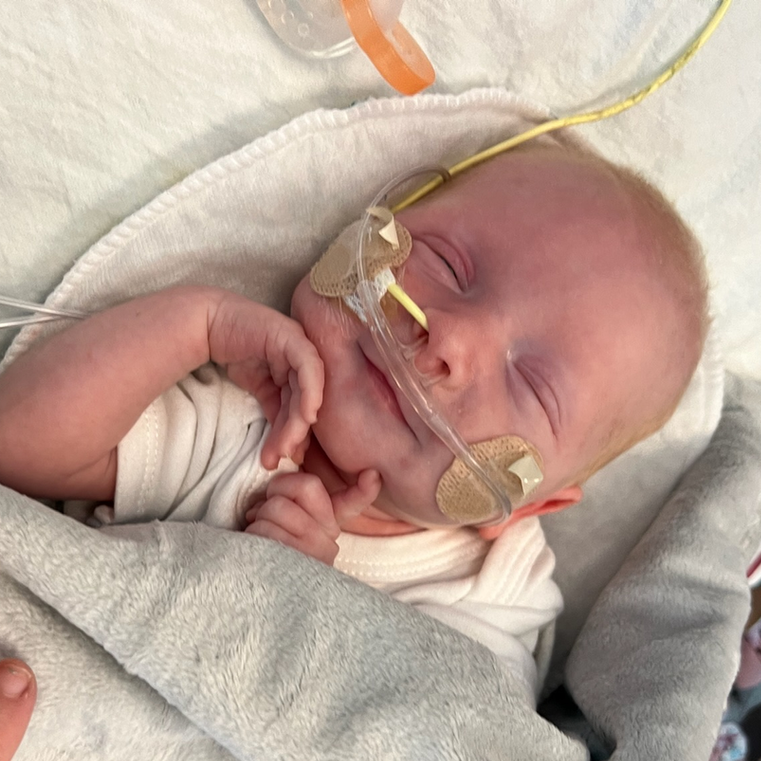
Researchers from the Children’s Hospital of Philadelphia, in collaboration with Penn Medicine, developed an individualized gene therapy for a baby identified as KJ Muldoon. He was diagnosed with an ultra-rare disease (1 in 1.3 million) in which the liver cannot properly process proteins (carbamyl phosphate synthetase I deficiency), leading to a lethal buildup of ammonia and risk of early death.
KJ M. was born in August 2024 and quickly showed severe symptoms. After a mutation in the CPS1 gene was confirmed, he was placed on the liver transplant list before reaching 6 months of age. The medical team, in a record time of around six months, designed, tested, and received approval to apply the therapy via intravenous messenger RNA, following successful trials in cells, mice, and non-human primates.

What has happened so far?
To date, the baby has received three doses of the treatment and has shown significant improvement: he requires fewer medications and a less strict diet. It’s still too early to determine whether the therapy directly affected the liver, as a biopsy has not yet been performed due to his age. Nor can it yet be declared a definitive cure, as long-term follow-up is needed to confirm the treatment’s effectiveness, durability, and safety..
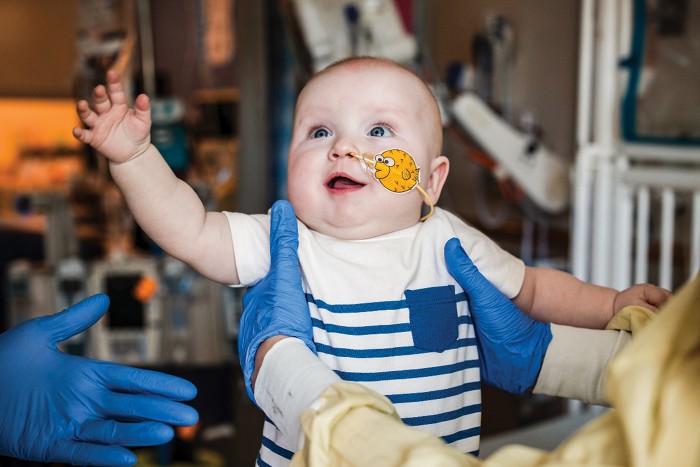
Why is this so important?
However, this is an unprecedented advancement in the history of genomic and precision medicine. It is the first time personalized gene editing has been applied in-vivo, developed specifically for a single patient—and in record time. It marks a turning point in the treatment of rare diseases.
The idea that we can create therapies tailored to each individual mutation is no longer science fiction—it’s reality. And this opens the door to a new era for millions of people around the world living with rare genetic diseases.
🧬Are you interested in genetics and the future of medicine?
If you found this breakthrough interesting, please share this article and leave your comments below.
Your engagement helps more people discover the true value of medical genetics!
Photos Credits: Children’s Hospital of Philadelphia; Muldoon family. From: https://www.pennmedicine.org/News/worlds-first-patient-treated-with-personalized-crispr-therapy
 Dra Adriana Perez-Grovas Saltijeral
Un comentario sobre “A New Era in Genetics: CRISPR Drives the First Personalized Therapy for a Rare Disease”
Los comentarios están cerrados.